
Want a fresh history of the Merovingians? Maybe the newly published Merovingian Worlds (Cambridge University Press, 2024) is for you!
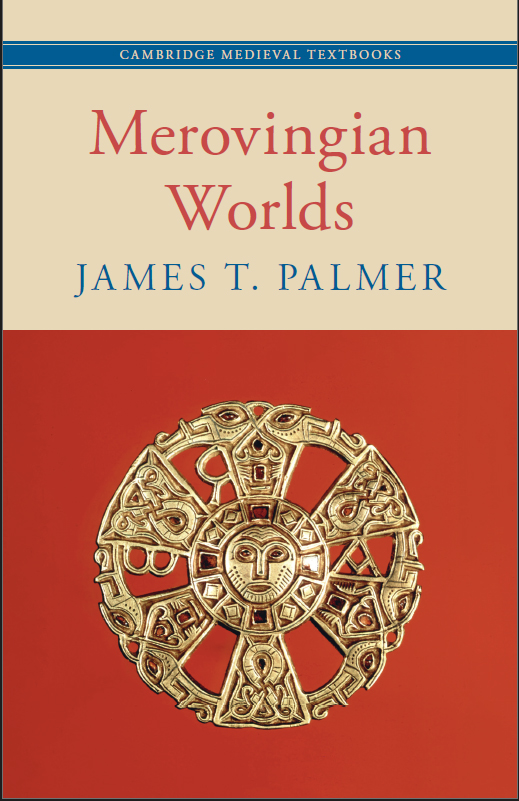
Ok, so it begs the questions of whether we need a new history of post-Roman Gaul. Maybe? The last English language survey, Ian Wood’s The Merovingian Kingdoms, is now 30 years old. It’s still very good. But the recent Oxford Handbook of the Merovingian World (2020), edited by Bonnie Effros and Isabel Moreira, reminds us that a wealth of scholarship has changed how we understand nearly every aspect life in the period. So time for a small refresh perhaps?
I did not, however, just want to provide a straight synthesis of current thinking or a nice storehouse of facts. That would be dull to write and therefore painful to read. A fun thing about the period c. 450-c. 750 is the arguing over how to interpret things and debates over what was ‘important’. Textbooks should give a bit of the how and why of academic debates. Pretending otherwise is dishonest and misleading.
That does mean highlighting a few technical and political matters. Merovingian history did not arrive with us ready formed just because it had already happened. It required people to find textual and material evidence and then it required people to interpret it all. Both stages involved judgement and prejudice. ‘Scientific standards’ needed to be developed, ripped apart, and built anew.
Merovingian history has been constructed by the friends and enemies of religious polemic, misogyny, class politics, nationalism and racism. It has caught the attention of pioneers of manuscript studies, linguistics, numismatics, burial archaeology, and now people using aDNA and climate proxy data. Understanding of the period is constantly restless and contested.
I have tried to look at Merovingian society in the round while taking this all in. You might know I mostly do religious and cultural history. Yet here I am trying my hand at politics, the economy, law, art, and more. Mistakes will have been made. Some of it will work better than other bits. One chapter I gave to two people I adore got the two responses ‘this is the best thing I’ve read on this subject’ and ‘this reads like you are going through the motions to fulfil a contract’. Well, readers, I tried.
What you probably want to know is what Merovingian history looks like now. Have I reprised the narratives of chaos and dark ages some historians insist on retelling? Have I defended the misunderstood creative vibrancy of the period others now proclaim? Have I decided, in time-honoured fashion, ‘it was all a bit complicated’?
Yes.
Look, it’s a 300 year period. Epic amounts happened. The beginning of the eighth century would have been completely alien to someone from the fifth century in how power worked, how the economy worked, how language worked – everything. Lots of people did well out of many developments. Lots of people got killed or, quite frankly, worse. Scoresheet history always depends on what you count and what you don’t. People now tend to like the Carolingians despite most of them being authoritarian humourless mass murderers with flexible morals, but they had better PR than the Merovingians. It doesn’t help that so much of the direct evidence for the Merovingian world has been lost as it allows people to imagine it was all awful… but, you know, you could imagine it had good points too… because that’s how the imagination works.
Anyway, it means Merovingian Worlds ends by paraphrasing Gregory of Tours: many things did happen, some of them good, some of them bad.

